Why Choose Us?
Wide Market
The company is an international trading enterprise, the main auto accessories, the main export markets for South America, the Middle East, Southeast Asia, Africa, Europe and so on.
Professional Technical Team
Continue to strengthen the combination of incentive and constraint talent management mechanism, build an elite management team.
Reliable Product Quality
Strictly according to the standard or customer's special technical requirements to organize production, to provide customers with 100% qualified products.
Excellent Customer Service
Our company not only provides users with high quality and low price high-tech products, but also provides users with high quality and thoughtful pre-sale, sale and after-sales service.
What is LED Motorcycle Headlights?
LED motorcycle headlights are one of the most important safety features on any bike. Whether you’re riding in the city or on the open road, good headlights help you see what’s ahead and be seen by other drivers.
A motorcycle shock absorber is a device that slows down the impact of a motorcycle. In other words, it is a system designed to minimize the impact of the road surface as much as possible. Because it can not only greatly improve riding comfort, but also make the tires close to the ground, so that the tires have more grip ability, and then improve the driving performance of the motorcycle. Common motorcycle shock absorbers (or electric motorcycle), in terms of their structure, are mostly a combination of metal coil springs and hydraulic buffers. So, regardless of whether the metal springs are exposed or not, the working principle of the front and rear shock absorbers is basically the same.
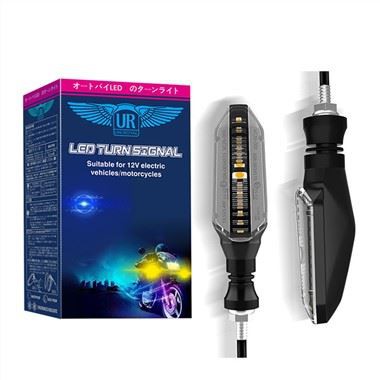


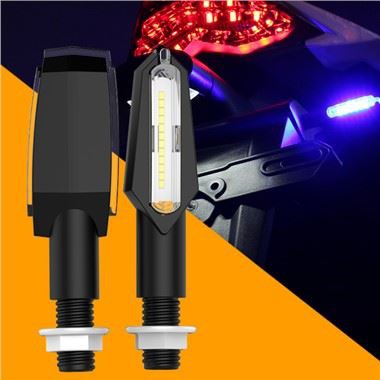


Advantages of LED Motorcycle Headlights
Unmatched Visibility - Be Seen like Never Before
Imagine driving along an unfamiliar winding road at dusk when traditional bulbs struggle to penetrate the darkness - risky! LED motorcycle headlights have unparalleled brightness and crisp light output, driving at dusk becomes far safer thanks to increased visibility to your fellow drivers - day or night - this visibility gives both yourself and others on the road added peace of mind and safety.
Built to Last: Durability That Withstands the Ride
Motorcycle journeys often include bumps, vibrations, and unpredictable weather changes that expose traditional lightbulbs with delicate filaments to damage from shocks or vibrations; in such conditions, LEDs become champions of durability as their solid state devices lack fragile filaments which renders them virtually immune from shocks and vibrations; providing consistent lighting even during more adventurous rides!
Fuel Efficiency Champion: Save Money, Ride Further
To address the efficiency concerns of motorcycle riders, traditional bulbs often draw excessive power - leading to higher fuel consumption and strain on electrical systems. In contrast, LED motorcycle headlights represent true energy efficiency by drawing only up to 80% less power consumption - meaning reduced costs, longer battery life span, and decreased environmental impacts for mutual benefit for your wallet and planet alike!
Style Meets Safety: Customize Your Ride Confidently
Gone are the days when LED motorcycle headlights were limited to white; now riders have more creative freedom with customized lights that suit the personality and character of their motorcycle and express artistic inclinations - choose traditional amber, vibrant red/blue combinations, or multicolored options to give their ride that personalized touch while staying safe at all times! LEDs enable both safety and style to coexist!
Instantaneous Reaction and Clear Signalling
Split seconds can play an essential role when traveling across roads and highways, and traditional bulbs exhibit a slight delay when turning on, which could prove harmful in emergencies. By contrast, LED motorcycle headlights respond instantly, transmitting an immediate and clear signal that allows drivers to respond more rapidly, decreasing accident risk while creating an overall safer riding experience for all involved parties.
Illuminate Your Entire Motorcycle
LED technology's advantages extend well beyond turn signals. Consider upgrading not only turn signals but also headlights, brake lights, running lights, and auxiliary lights in favor of creating an appealing aesthetic with LEDs illuminating all aspects of your motorcycle - not only visibility but style as well.
Installation Versatility: Plug-and-Play or Get Creative
Many LED motorcycle lights are specifically crafted to allow for simple installation, with plug-and-play connectors seamlessly interfacing with the wiring harness of your motorcycle. This helps avoid time and effort-intensive electrical modifications requiring modifications; saving both effort and time!
Advanced Features of LED Motorcycle Headlights
Daytime Running Lights
Some LED motorcycle headlights are designed to turn on and emit low-intensity lights, called DRLs, as soon as they detect motion. These lights are on during the day and improve your visibility when traveling on the road. That will not only increase the noticeability of you by other drivers but will also considerably increase your safety.
Dual Beam Functionality
Certain LED motorcycle headlight units feature dual-beam functionality, which enables users to switch between high and low beam settings for increased control over light output based on road conditions and traffic volumes. With such flexibility at hand, drivers have even more ways to personalize light intensity depending on road conditions or traffic issues.


Automatic Leveling
Modern LED motorcycle headlights come equipped with automatic leveling sensors that adapt the beam angle according to your motorcycle's load, offering optimal illumination whether riding solo or carrying passengers and luggage. This ensures maximum illumination regardless of what conditions may exist while out and about on your ride.
Plug and Play Installation
Many LED motorcycle headlight upgrades feature an easy installation process with "plug and play" systems to simplify setup for even technically inexperienced riders, making upgrading to LED motorcycle headlights an accessible solution.
Remember: It's crucial to choose an LED motorcycle headlight upgrade tailored to your motorcycle model for optimal performance. Let Rogue Rider Industries experts guide you toward the best solution for your Harley Davidson LED motorcycle headlights Installation!
Factors to Keep in Mind When Selecting LED Motorcycle Headlights
Beam Pattern
When discussing beam patterns in headlights, one way light can be distributed is via their beam pattern. Different beam patterns exist for specific uses - providing a wider field of view or a more focused spotlight - depending on riding style and environment considerations. When selecting one that suits your riding needs best.
Lumens and Lux
Lumens measure the total light emitted by your headlight while Lux enumerates its intensity at any particular spot in space. Higher lumen counts typically denote brighter headlights while increasing Lux values indicate a stronger beam focus.
Color Temperature of an LED Headlight
Color temperature for LED headlights is measured in Kelvins (K). Its range can extend from warm yellow (around 3000K), through warm white to cool white and then blueish white lighting; though whiter light might seem brighter at first, its harsher light could have adverse effects on eyesight and may less effectively penetrate fog and rain than warm white/yellowish lights can.
Regulation Compliance
Make sure the LED headlights you select comply with local regulations regarding motorcycle headlight specifications if you plan on riding internationally. This step should especially be considered.
LED Motorcycle Headlight Aiming Procedure
Turn On Headlights
Set the headlight switch to a low beam position.
Measure and Mark Walls
Take measurements from ground to center of the motorcycle headlight, mark this height on any wall used as the target surface, then draw a horizontal line across the wall at this marked point to aim your motorcycle accurately.
Find Your Headlight Adjustments
For assistance identifying where the adjustment screws for headlights can be found, referring to your owner's manual may help locate them near the housing - these controls typically control vertical and horizontal adjustments of headlights.
Vertical Adjustment
Most often, turning the adjustment screw clockwise will lower the headlight beam intensity while turning it counter-clockwise will raise it.
Adjust the low beam
By following your marked line on the wall, use vertical screw adjustment so the low beam pattern falls slightly beneath it - this ensures your light illuminates effectively without blinding oncoming traffic.
Horizontal Adjustment (if available)
Some motorcycles feature a separate screw for horizontal adjustments; use this screw to ensure the center of your beam aligns directly in front of your motorcycle.
Repeat for high beam (if applicable)
If your motorcycle features separate high beams, switch them on by turning the headlight switch from low beam to high beam mode and following steps 4-6 for each beam separately, ensuring they overlap slightly more than before.
In scientific terms, shock motorcycle shock absorbers transform kinetic energy into heat and then disperse it into the atmosphere.
To put it in more simple terms, imagine a vehicle that encounters a bump on the road. When it hits the bump the shock is compressed, and then it is immediately stretched out to its normal state.
On the inside of a shock motorcycle shock absorber, there is a piston. During this motion, the piston moves up and down, when the shock is compressed and stretched out.
While it was moving the hydraulic fluid that is also inside the shock was forced through many tiny holes in the piston. As the fluid cannot flow freely but has to squeeze these tiny holes, resistance is created. And that is the effect of shock absorption.
As in the previous example there was only one bump on the road, the amount of resistance was minimal, and very little heat was generated. But when a vehicle drives through many bumps on the road, the piston moves up and down many times very fast. Then the shock motorcycle shock absorber generates much more heat that it “gives away” to the atmosphere.
If a shock motorcycle shock absorber generates more heat than it can “give away”, it may result in overheating. In such a case, the driver will experience either bouncing, harsh rides, or even reduced braking performance.
What Are the Symptoms of Worn Motorcycle Shock Absorbers?
As shock absorbers help control the movement of your motorcycle when they start to deteriorate you are likely to notice that your ride becomes more bumpy and uncomfortable. This is due to the fact that your tires are losing more contact with the road then they should. Look out for any unusual vibrations or if your rides are becoming increasingly springy.
You may notice that your motorcycle starts to swerve when you applying the brakes. Worn shock absorbers could cause your bike to swerve as well as making an unusual knocking sound in the process. If you notice any unfamiliar movements or sounds, then it could be time to get your shock absorbers replaced.
If your stopping time has become increased, this could also be the result of worn shock absorbers. This is hazardous as you need to be aware of your stopping time in order to come to a safe stop. This is especially important when riding in bad weather conditions. Therefore, if you notice this issue don’t delay in investigating the problem.
When you ride with worn shock absorbers, your motorcycle will not be able to keep the tires properly on the ground, meaning that a slight bounce will be caused as you ride over a road surface. This unbalanced contact with the road surface will eventually lead to uneven tire wear. You are likely to notice the effects of this by examining your tire tread – so check out your tires to see if any damage has already been done.
You may have noticed some leaking fluid running down the side of your shock absorbers. This loss of fluid is an immediate red flag and could indicate your shock absorbers are not functioning as they should be and there is a complication.
Motorcycle Shock Absorbers: 4 Settings to Know
Adjusting the preload, preload
Put the motorcycle on a center stand so that the rear wheel does not touch the ground and measure the height of the motorcycle. Put it back so that the wheel is this time in contact with the ground and take the measurement again. The gap should be about 10mm. Sit on the motorcycle and take the measurement again. It should drop approximately 3 cm. Base spring compression responds to on-board weight (rider, passenger, luggage). If the preload is too high , the motorcycle does not sink enough and the rear wheel does not effectively absorb the holes and other unevennesses encountered. If the preload is too low , the motorcycle lowers and the suspension bottoms out (the shock absorber comes to a stop on the bumps). The idea is that the bike, once loaded, lowers by a third of the travel.
Rebound setting (bottom of rear shock)
Rebound is the time taken for the shock to return to its initial position after compression. Make your adjustments gradually (two clicks) and test the result. If the motorcycle seems to sink when accelerating, and cornering is difficult, you will need to release the trigger . If it tends to bounce and you feel a decrease in handling, add some rebound . ( Tips : remember to write down the initial values to come back to them in the event of unsatisfactory results.) The trigger must be sufficiently closed to avoid the upward projection of the motorcycle when the spring is released, and the compression must on its side be low to allow the absorption of the bump.
Compression adjustment (at the top of the rear shock)
Loosen the compression damping if your motorcycle does not grip properly when accelerating, if it is not grippy enough on bumpy roads. If you find it too flexible, unstable, close the compression. When crossing a speed bump, if your motorcycle tends to climb too suddenly, it is because the shock absorber is unable to absorb the difference in height: the compression is too closed. If, on the contrary, you feel a rebound effect when crossing, the rebound and compression are too open.
Speed Adjustment
Some shocks, allow the shocks to be adjusted to “low speed” and “high speed” positions. Here again, you have to make the changes gradually and test the result obtained.
● Motorcycle collapse: If your motorcycle seems to sag on one side or back, this could indicate a loss of efficiency of the shock absorbers.
● Unusual driving behavior: Excessive rebounds, a feeling of floating or instability during turns are warning signals.
● Visual wear: Oil leaks, traces of corrosion or physical damage are obvious indicators that it is time to replace the shock absorbers.

Some Considerations to Determine When to Change the Motorcycle Shock Absorbers
Driving type
Aggressive driving or on damaged roads can speed up the wear of shock absorbers. If you often drive in difficult conditions, it may be necessary to inspect them more frequently.
Road conditions
Roads in poor condition, full of puff nests and irregularities, can cause faster wear of shock absorbers. If you regularly frequent such roads, consider checking the condition of your shock absorbers more frequently.
Motorcycle model
Some motorcycle models are equipped with better quality shock absorbers and can therefore have a longer lifespan. Consult the manual of the owner of your motorcycle to obtain specific recommendations for the model.
Signs of deterioration
If you notice obvious signs of deterioration such as oil leaks, abnormal noises, a collapse of the motorcycle, or an unstable driving behavior, it is recommended to have the shock absorbers inspect, regardless of the mileage.
Why Should Motorcycle Shock Absorbers Be Replaced in Pairs?
When functioning properly, a vehicle’s suspension does a bit of everything. It promotes precise steering control and handling. It contributes to a more stable and comfortable ride. It reduces braking distance and protects the vehicle’s tires from abnormal wear. And the suspension helps increase overall driving safety in a wide range of road and weather conditions.
When not functioning properly – including when shock absorbers and other components are worn out or damaged – the suspension might not be able to provide these critical benefits. This is why each suspension component should be inspected every 20.000 kilometers or at least once per year and immediately replaced when signs of wear are detected.
But simply replacing worn suspension components isn’t enough. Installers must also remember to replace new shock absorbers in pairs and performing the complete job by also installing new protection and mounting kits, which are critical to obtain the right performance of those important safety elements.
The most important benefit of shock absorbers is to help hold the vehicle’s wheels against the driving surface for increased traction and control. As the vehicle encounters uneven road (or off-road) surfaces, the suspension moves vertically to help maintain stability, control and passenger comfort. Maintaining a strong between the tires and driving surface is a critical part of this job because it helps preserve steering and braking control as well as overall vehicle stability. In order to perform these functions effectively, every shock must be in good working condition.
Any time a shock absorber needs to be replaced, its companion across the same axle (front or rear) must also be replaced to ensure that at least both shocks are in equivalent working condition. Because a new shock has not yet experienced any internal wear, pairing it with an older unit is likely to create uneven damping characteristics across the axle, which can cause the new shock to overcompensate, putting it a higher risk of damage and premature wear.
Additionally, in some countries, a notable difference in the condition of the shocks might cause a vehicle to fail its technical inspection.
Our Factory
Sheng Ying Auto Accessory Co., Ltd. was established in 2010, the company is an international trading enterprise, the main auto accessories, the main export markets for South America, the Middle East, Southeast Asia, Africa, Europe and so on. Company existing staff 150 people, is equipped with the sales department, purchasing department, finance department, administration department, warehouse and other departments, the company adhere to the "people-oriented, pragmatic innovation" internal management philosophy, "honesty, mutual win-win" foreign business philosophy, advocating "respect for talent, men, use" principle of choose and employ persons, Continue to strengthen the combination of incentive and constraint talent management mechanism, build an elite management team.