Why Choose Us?
Wide Market
The company is an international trading enterprise, the main auto accessories, the main export markets for South America, the Middle East, Southeast Asia, Africa, Europe and so on.
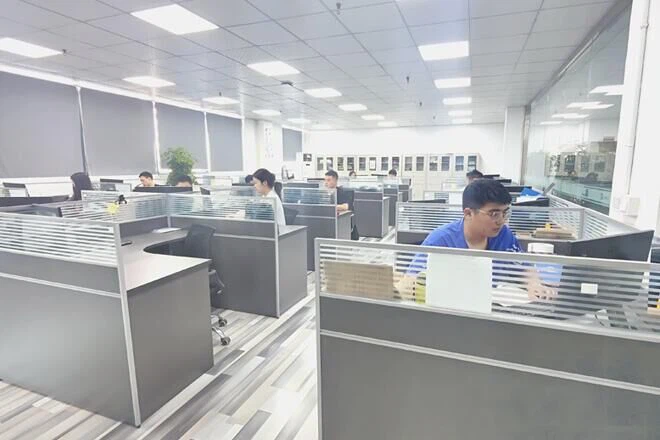
Professional Technical Team
Continue to strengthen the combination of incentive and constraint talent management mechanism, build an elite management team.
Reliable Product Quality
Strictly according to the standard or customer's special technical requirements to organize production, to provide customers with 100% qualified products.
Excellent Customer Service
Our company not only provides users with high quality and low price high-tech products, but also provides users with high quality and thoughtful pre-sale, sale and after-sales service.
What is LED Work Lamp?
LED work lamps are essential accessories for vehicles used in off-road, construction, and industrial settings. These lights utilize energy-efficient LED technology to provide powerful illumination, enhancing visibility during nighttime work or in low-light conditions. LED work lamps typically emit a wide and bright beam pattern, illuminating a broad area around the vehicle, making them ideal for lighting up work sites or construction zones. They are durable, long-lasting, and resistant to shock and vibration, making them suitable for rugged environments.


Advantages of LED Work Lamp
Long Service Life
The greatest advantage LED work lamps offer over traditional lights is their incredibly long lifespan. Typically an LED light can last up to 100,000 operating hours or longer. That is up to 4 times longer than the expected lifespan of a fluorescent light. Once installed, they are going to be in place, fully operational, for a long time to come.
Energy Efficiency
LED lights are highly efficient and consume very low amounts of power. Referred to as luminous efficacy or useful lumens - these two measurements detail the amount of light produced per unit of power consumed. LED work lamps massively out perform more traditional technologies. On average, switching out to LED lights delivers a saving of 60-75% in energy costs.
Compact Size
LED devices are an extremely small technology. This makes them highly adaptable in terms of application. They can be more easily installed in areas of restricted access where a larger light fitting just cannot be placed. This has obvious benefits when it comes to installing work lights on trucks, tractors, trailers etc.
Durability & Reliability
LED lights do not contain any fragile parts such as glass elements or filaments. This means LED lights are more resistant to rough and tumble. They can survive a knock or a drop much better than a traditional light unit. This is an excellent advantage when it comes to work lights as unexpected knocks and bumps can be par for the course.
End of Life Control
LEDs fail slowly by dimming over time rather than a sudden loss of light as is the case of standard lights. This means you won't be caught out in the middle of a job and will have time to address th situation and replace the light before it becomes a significant problem. This has obvious advantages when it comes to the use of LED work lamps.
Better for the Environment
LED lights are better for the environment. They do not contain dangerous materials such as mercury and are a safer choice for the environment compared to fluorescent or mercury vapor lights which come with the headache of specialist disposal at the end of their life cycle.
Radiation Free
LED lights do not emit potentially dangerous radiation energy in the form of Ultra Violet. Fluorescent lighting on the other hand is a source of potentially hazardous UV rays. It is believed that prolonged exposure to these lights can cause both skin and eye problems. If you want to avoid UV exposure, LED is the better option.
Safety
Safety is a key advantage of LEDs that can sometimes be overlooked. Incandescent lights convert up to 90% of the energy consumed into heat energy. Aside from the concerning lack of efficiency here there is also an obvious safety concern the heating of the area surrounding the light. LED lights generate zero forward heat during operation.
LED Light Is Instantaneous
LED lights turn on and off instantaneously. They do not require a warm-up period which is the case for metal halide alternatives. An added bonus here is that the action of switching the LED on and off does not cause a degradation of the light unit. It has no detrimental effect on integrity or performance.
Cost Savings over Time
LED work lamps generate excellent cost savings over time. They emit more lumens, (light output), per watt, (power unit consumed), than standard incandescent lights. The performance of LED lights are not impacted by their size or shape. Over the course of their life span work lights LED generate significant savings when it comes to energy consumed.
Application of LED Work Lamp


Interior Lighting
Whether you’re doing your chores at home, working on your computer in the office, or taking photographs in your studio, you will need good lighting. LED work lamps can be used as spotlights or floodlights. Spotlights for when you want to focus on a specific area, such as directing lights to your subject in photography; and floodlights when you want to illuminate a wide area, such as a portion of your office. Different color filters can also be placed on LED work lamps. They give great effect when used in stage plays or even when you simply want to have a more dramatic lighting in your living room or bedroom.
Exterior Lighting
Outdoor lights are not only beautiful, but are very useful as well. You could mount them in your porch, light up gardens, and illuminate recreational areas such as parks, squares, and public landscapes, among others. In public areas, people appreciate proper lighting, because they feel safer when hanging out at night. And when used at home, they could help you determine who are coming or passing in front of your house in the evening. Leaving them on all night would not cost you a lot of money as they are extremely energy efficient.
Construction Lighting
Construction workers rely on powerful artificial lights when working inside houses, buildings, and on the road, when the work has to be done in the evening. When the work is inside houses and buildings, permanent lights are probably not installed yet or at least not working while the construction is ongoing. A LED work lamp is easy to install and should not cause distraction even in small spaces. Construction work on the road during nighttime, on the other hand, is important so not to create traffic buildups during rush hours. As there will be a lot of workers in the area, powerful lights are needed. Light bars will be perfect in these situations.
Off Road Lighting
Unlike in city driving, off road drivers experience challenges like heavy rain or heavy snow in the middle of nowhere. They could be in rarely-used roads that are muddy and rocky; they could be in mountainous areas; they could be driving along riverbanks. Their situations often lead them to driving in the night. With the difficult terrains an off road driver has to pass through, off road lights would be essential, as they are powerful enough to penetrate splashes of mud and dirt.
Boat Lighting
This one’s a beauty. A lot of boats are outfitted with LED work lamps to make them pretty when they sail at night. Boat owners usually choose different cool colors for the boats to exude a feel of otherworldliness. They can be mounted inside or outside the boat. Light bars are strong and waterproof so it would not matter if they are placed under the boat, or if water splashes on them continuously.
The Considerations for Buying LED Work Lamp
LED work lamps are available as freestanding units or as attachments that mount to other tools such as a drill or hammer. Depending on your needs, you will want to choose a light that provides enough brightness for your primary use. For example, if you often work in tight spaces where you need a floodlight, you will want to select a light with a wide beam. On the other hand, if you need to illuminate a large area, you will want a light with a narrow beam.
If you do not know what a lumen is, then you need to know that it is the unit used to measure the brightness of a light source. The higher the number, the brighter the light. When selecting a work light, you need to consider not only the area that you need to illuminate but also the distance from the source of light to your work surface. You can select a light with a high number of lumens, but if you place it too close to your work surface, it will be too bright. You can also select a lower-lumen light and place it farther away from your work surface, but if it does not provide enough light, you will need to use another light source to illuminate the same area.
You want a light that provides sufficient brightness, but you also want one that will not use up all of its energy too quickly. Most LED work lamps have a battery life of between one and four hours, depending on the brightness setting. If you select a light that has a short battery life, you will need to carry around a portable charger or keep a spare battery near your work surface. Battery life and brightness are also affected by the type of bulb used in the light. LEDs are designed to last longer and use less energy than incandescent lights. However, LEDs produce less light per watt than incandescent. If you select an incandescent work light, you can expect it to produce more brightness per watt than an LED light.
Some work lights are equipped with a variety of special features that can make them more convenient to use. If you will be using your work light in more than one location, look for a light that has an adjustable head that allows you to modify the beam width. Some lights also have a rotating head that allows you to direct the light to illuminate areas such as a wall or ceiling. If you need to transport your light to a different location, look for one that has a stand or clip to allow you to hang it from a nearby structure. Some work lights have a hook that can be used to hang the light from a high location. If you will be transporting your light in your vehicle or on a boat, make sure that it is water-resistant.
Some work lights are available with a colour temperature setting. If you select a light with a warm colour temperature, the light will have a yellowish hue and will be easier on your eyes. It will also reduce shadows and provide the best lighting for certain types of projects such as fine woodworking. A cool light with a bluish hue produces shadows that are more apparent and is ideal for tasks such as soldering or repairing electrical equipment. If you need a work light that has both warm and cool settings, you will probably pay more for the convenience. If you do not require a dual-colour option, you can save money by selecting a work light that produces either a warm or cool light.

The brightness level shows on the lumen and what level you need depends on your working purposes. The more lumen the more brightness you will get. If you need a handheld work light for small DIY projects, BBQ, or garage, 500 to 1000 lm will be enough. They come in small sizes and at an affordable price as well. According to the test, 700 lumens can spread around 100 meters. If you need high intensity and long-time running work light for camping outdoor, construction ground, indoor playground, or industrial repair, go for 1500 to 3000 lumens. They have a long life span and illuminate at least 150 to 250 meters efficiently.
Proper Cleaning Techniques for LED Work Lamps
Cleaning LED work lamps on a regular basis with the right tools and methods is crucial to preserving their effectiveness and longevity.
To keep your LED work lamps spick-and-span and fully operational, follow these steps:
Lens sanitizing The lens, which concentrates and directs the light output, is an essential part of the LED work lamp. Prior to unplugging the work light, clean the lens and turn it off. Then, use a soft, lint-free cloth or microfiber cloth that has been dampened with a mild cleaning agent (like a solution of water and mild dish soap). Avoid using harsh chemicals or abrasive items that could scratch or harm the lens.
Cleaning the cooling fins and housing
In order to effectively dissipate heat from the LED work lamp, avoid overheating, and maintain peak performance, the housing and cooling fins are crucial. Be careful not to allow any moisture to contact the work light’s interior parts. Use a soft brush or cloth to slowly remove dirt and debris from these areas. For tenacious dirt, you might use a moderate cleaning agent and a moist cloth.
Secure cleaning supplies and methods
Using gentle cleaning methods and non-abrasive cleaning supplies that won’t harm your LED work lamps or any of their components is crucial. Avoid using aggressive chemicals or solvents since they could damage the housing, lens, or internal components. Before cleaning, always make sure the work light is turned off and unplugged. Then, wait until it is completely dry before turning it back on. By keeping your LED work lamps clean on a regular basis and using the right cleaning techniques, you can increase their performance, lengthen their lifespan, and make sure they offer bright, effective illumination for your projects.
Ensuring proper ventilation
Good ventilation is essential for maintaining a cool operating temperature for your LED work lamps. Ensure adequate airflow is around the work light, especially around the housing and cooling fins. Avoid placing the work light in confined spaces or blocking the vents, as this can lead to overheating.
Avoiding direct sunlight exposure for prolonged periods
While many LED work lamps are designed for outdoor use, avoiding exposure to direct sunlight for extended periods, especially in hot climates, is essential. Prolonged sun exposure can cause the work light’s housing to heat up, increasing the internal temperature and potentially causing damage to the LEDs and other components. If you need to use your LED work lamp outdoors, try to place it in a shaded area or use a sun shield to protect it from direct sunlight.

The Differences Between LED Work Lamps and Halogen Work Lamps
Energy Consumption
Het grote voordeel van LED work lamp opzichte van halogeen werklampen is het gereduceerde energieverbruik. Volgens de NOS verbruikt een halogeen werklamp 75% meer energie dan een LED werklamp. Daarnaast zorgt traditionele verlichting ook voor meer CO2-uitstoot. Naast het energieverbruik stoten de halogeen werklampen ook veel warmte uit. Dit komt doordat de lamp ongeveer 30% van het stroomverbruik om zet in licht.
Safety
Besides the difference in energy consumption, it is good to make the comparison between the different light colors. The work lamp produces a light color that can be compared to the general color of daylight. In contrast, the halogen worklight emits a dark, warm light color. Practice has shown that this warm color works less efficiently.
Due to the warm light color emitted by halogen work lamps, the human eyes get tired faster. This is a lot less with LED lighting, as the light color of LED work lamps is very similar to daylight. To prevent accidents, we therefore strongly recommend companies to use LED work lamps. This will improve safety on the road.
Sustainability
The lifespan of work lamps as opposed to halogen worklights is enormous. Where a halogen lamp lasts about 500 hours (12.5 working weeks), the LEDs from a good work lamp can last up to 50,000 hours. In some cases this is even longer than the machine on which the work lamp is mounted.
Besides the fact that these developments in the field of LED lighting make a good contribution to the world of tomorrow, this development also ensures a reduction in costs. When the standard halogen worklight has reached its number of hours, it must be replaced. There are costs associated with this. In addition to the new lamps that must be ordered, there are also costs associated with replacing the lighting. With the advent of work lamps, these are completely history.
Difference in Form
Because the bulbs used in the LED work lamps are smaller than halogen bulbs, the smaller in size LED work lamps also have a good light output. In addition, the reduction in size of the bulbs ensures that the LED lamps have a higher light density.
Despite the light density of work lamps, the light distribution of an work lamp is much better than that of a halogen worklight. When using a halogen worklight, you will notice that the 'wick' of the light is well lit, but around the 'wick' the light distribution quickly diminishes.
Difference in Price
If we compare the purchase price of the two types of lamps, the LED lamp costs the most. However, it also delivers by far the most value. Thus, when using work lamps, you save on power consumption, mounting the lights and also contribute to a better world tomorrow.
An work lamp already saves 75% of its power compared to a halogen worklight. In the long run, this investment will therefore often pay for itself. This is partly due to the number of burning hours. But what is the exact payback period of LED lighting?
Our Factory
Sheng Ying Auto Accessory Co., Ltd. was established in 2010, the company is an international trading enterprise, the main auto accessories, the main export markets for South America, the Middle East, Southeast Asia, Africa, Europe and so on. Company existing staff 150 people, is equipped with the sales department, purchasing department, finance department, administration department, warehouse and other departments, the company adhere to the "people-oriented, pragmatic innovation" internal management philosophy, "honesty, mutual win-win" foreign business philosophy, advocating "respect for talent, men, use" principle of choose and employ persons, Continue to strengthen the combination of incentive and constraint talent management mechanism, build an elite management team.