


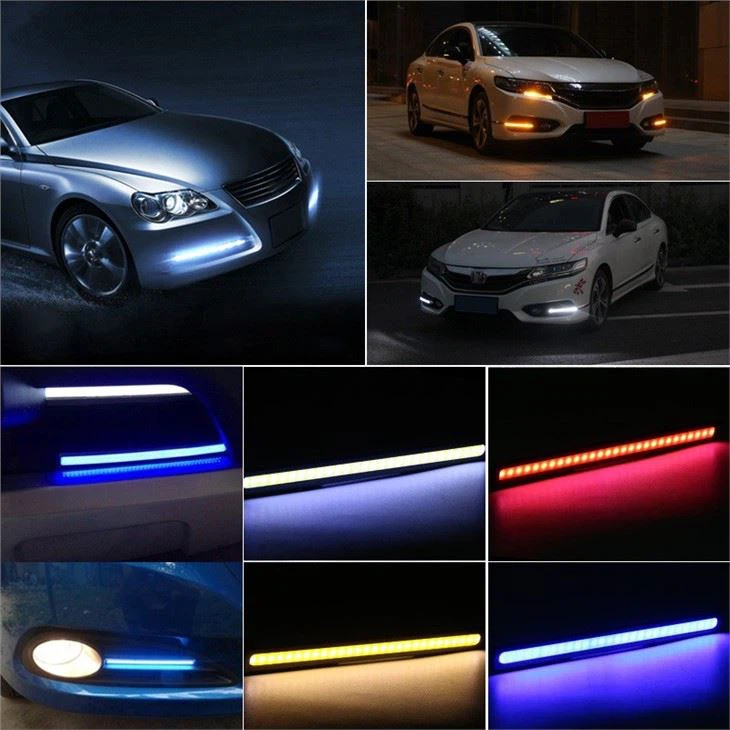
Car COB LED Daytime Running Light
1.Car COB LED Daytime Running Light.
2.COB daytime running light 17CM.
3.Super bright car daytime running light.
4.led daytime running light ultra-thin waterproof DC12V.
Product Introduction
Overview
Quick details
Car COB LED Daytime Running Light.
COB daytime running light 17CM.
Super bright car daytime running light.
led daytime running light ultra-thin waterproof 12V.
What is the point of daytime running lights?
During the day, most drivers turn their headlights off. A DRL enhances road safety by helping drivers see other vehicles quickly. DRLs are also not fog lamps. When driving, fog lights cut through fog without causing glare.
Are daytime running lights always on?
DRLs are lights located on the front of a vehicle that remain on whenever the engine is running. Unlike headlights, daytime running lights are fairly dim and don't illuminate the road ahead.
what are daytime running lights?
Helping you to be safe and be seen
Low energy front lights that switch on automatically
Daytime running lights are designed to make your vehicle more visible in bright, daytime conditions. They should come on automatically when you start your engine.
Bright enough to be seen clearly in daylight, DRLs are too bright to be used at night when they would cause dazzle.
They go off automatically when you switch your headlights on.
Usage
The daytime running lights normally switch on automatically once the ignition is turned on; other vehicles may switch on the daytime running lights when the parking brake is released or the vehicle is shifted into gear. The daytime running lights emit a brighter light when the headlights are not on and dim slightly while the headlights are on.
Safety performance
DRLs provided no statistically significant reduction in the frequency or severity of the crashes studied, only a statistically significant reduction of 5.7% in the involvement of light trucks and vans in two-vehicle crashes.
Effect of ambient light
As the ambient light level increases, the potential safety benefit decreases and the intensity of DRLs required for safety improvements increases. In the relatively dark Scandinavian countries, the safety benefits from DRL are approximately three times greater than those observed in the relatively bright United States.


You Might Also Like


Send Inquiry
